Controversy Erupts: Svetlana Staneva’s Cryptic Gesture After Olympic Loss to Taiwan’s Lin Yu-Ting Sparks Debate
The 33rd edition of the Paris Olympics has been marred by a storm of controversy following a dramatic featherweight quarterfinal. Taiwanese boxing sensation Lin Yu-Ting emerged victorious over Bulgaria’s Svetlana Kamenova Staneva with a unanimous decision. While Yu-Ting’s victory secured her third Olympic boxing medal, the aftermath of the match has ignited a fiery debate across the sporting world.
The real drama unfolded in the ring post-fight. Staneva, visibly distraught by her loss, refused to shake hands with Yu-Ting. Instead, she made a provocative gesture, displaying an “X” with her fingers. This act, widely interpreted as a reference to gender identity—implying a comparison between her XX chromosomes and Yu-Ting’s reported XY chromosomes—has become the focal point of heated discussions.
The controversy is rooted in a broader context of debates about gender and eligibility in sports. Last year, Lin Yu-Ting and Algerian boxer Imane Khelif were at the center of a significant scandal when they were disqualified from the World Boxing Championships in New Delhi. The disqualification stemmed from tests revealing elevated testosterone levels, with reports suggesting that both athletes possess XY chromosomes, traditionally associated with male biology.
The International Boxing Association (IBA) imposed the ban based on these findings. Both Khelif and Yu-Ting had the option to appeal to the Court of Arbitration for Sports (CAS). Yu-Ting did not appeal within the allowed timeframe, making the IBA’s decision final for her. Khelif initially appealed but later withdrew, solidifying the IBA’s stance.
In the face of this backlash, support has emerged for both athletes. Australian professional boxer Skye Nicolson has stepped forward, defending Khelif and Yu-Ting. Nicolson, who has sparred with both athletes, dismissed the controversy as a “publicity stunt” and clarified on Instagram, “I just want to clarify that both Khelif and Yu-Ting were born female. They have XY chromosomes but female bodies.”
Nicolson’s comments aim to counter the growing criticism and support the athletes during this turbulent period. Her stance adds a layer of complexity to the ongoing debate about gender in sports, revealing the nuanced perspectives within the boxing community.
In a surprising twist, Italian boxer Angela Carini, who faced Khelif in the ring, has also spoken out. Carini, who was initially embroiled in the controversy following her own defeat by Khelif, reached out to Gazzetta dello Sport to apologize for her actions. “I’m sorry for my opponent,” Carini said, expressing regret for not shaking hands post-fight. “If the IOC deems her eligible to compete, I respect that decision. I was angry and disappointed, and it wasn’t my intention to disrespect anyone.”
She said, “I just want to clarify a couple of things… I’ve actually fought and sparred with both of the girls. They were born female. They were born with an XY chromosome, which is the male chromosome, but they were born with female bodies.”
she would like to “embrace her” if they meet next.
“All this controversy makes me sad. I’m sorry for my opponent, too. If the IOC said she can fight, I respect that decision. It wasn’t something I intended to do. Actually, I want to apologize to her and everyone else. I was angry because my Olympics had gone up in smoke,” remarked Carini.
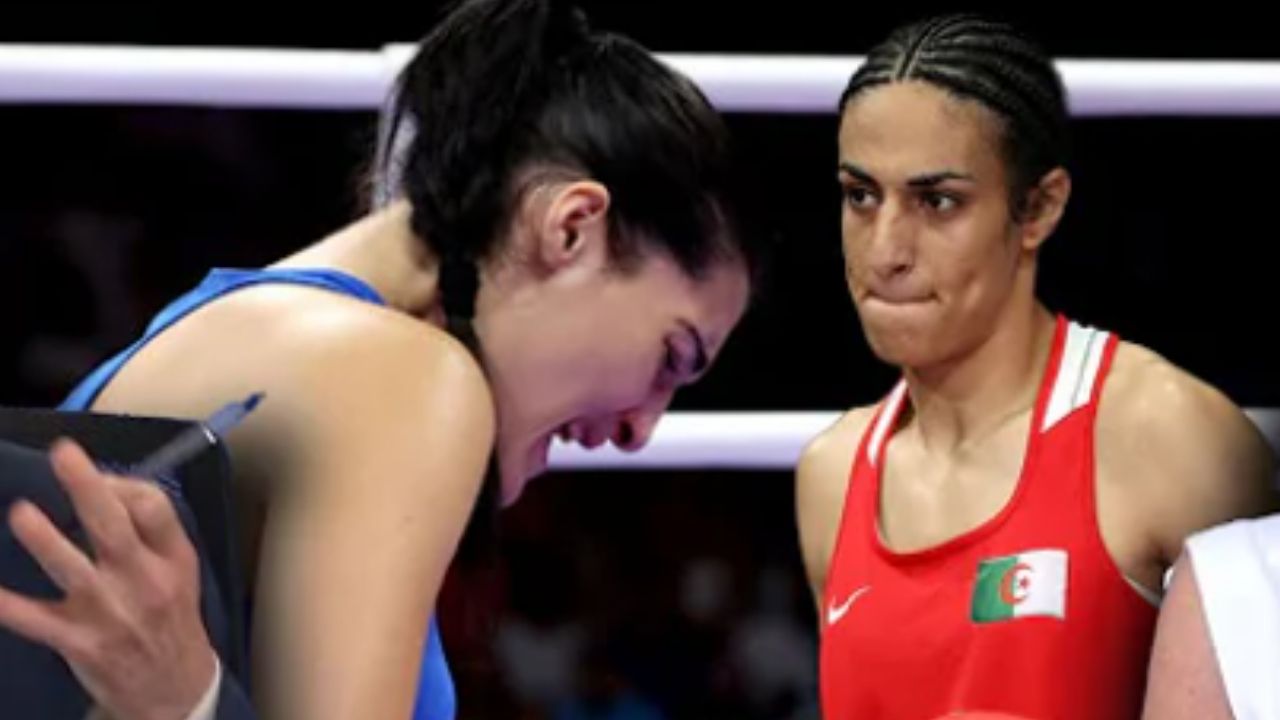
Carini’s apology reflects a sentiment of respect and recognition of the complex issues at play. The controversy has certainly cast a shadow over the Olympic spirit, yet it also underscores the need for understanding and dialogue in sports.
As the Olympic Games continue, the debate surrounding gender and eligibility is unlikely to dissipate. Staneva’s gesture, though controversial, has spotlighted the ongoing struggles and discussions within the sporting community. The world watches with bated breath as this saga unfolds, highlighting the intricate and often contentious intersection of sport, gender, and identity.