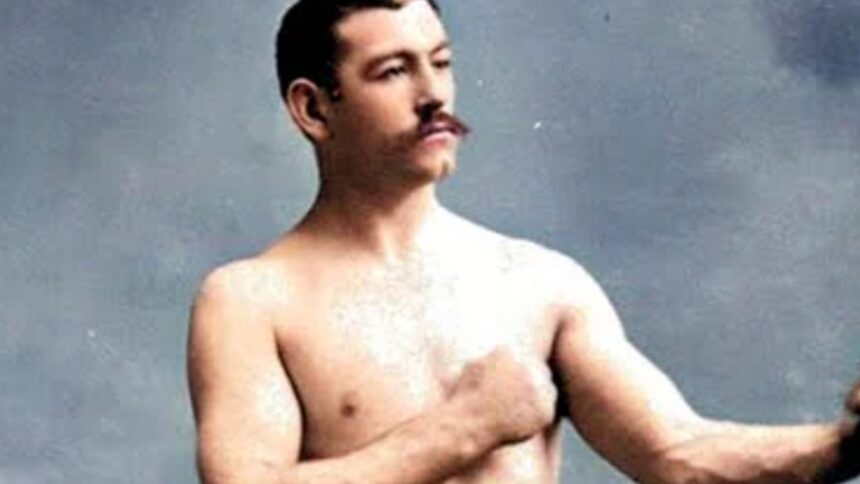
The Early Contenders: Corbett, Fitzsimmons, and Jeffries
James J. Corbett’s victory over Sullivan heralded a new era. Corbett’s reign lasted five years, during which he fought only twice, losing to Bob Fitzsimmons. Fitzsimmons’ tenure was similarly brief, ending with his defeat by James J. Jeffries in 1899. Jeffries was notably active, defending his title eight times before retiring unbeaten in 1904.
The Era of Jack Johnson
Following brief reigns by Marvin Hart and Tommy Burns, Jack Johnson became the champion in 1908. Johnson’s tenure was groundbreaking, marked by nine defenses over seven years, including a memorable knockout of a retired Jeffries in 1910.
The Rise of Jack Dempsey
Jess Willard ended Johnson’s dominance in 1915 but was quickly dethroned by Jack Dempsey in 1919. Dempsey’s ferocious style and powerful punching secured him a place in history, with a notable defense against Gene Tunney in 1926, watched by over 120,000 spectators. Dempsey’s rematch loss to Tunney in 1927 marked the end of his illustrious career.
The Transitional Champions: Schmeling, Sharkey, and Baer
The lineal championship went through a transitional phase with Max Schmeling, Jack Sharkey, Primo Carnera, and Max Baer each having brief reigns. These years were characterized by frequent title changes, reflecting the competitive nature of the heavyweight division during this period.
The Joe Louis Era: An Unprecedented Reign
Joe Louis’ victory over James J. Braddock in 1937 initiated the longest reign in heavyweight history. Louis defended his title 27 times over twelve years, dominating the division with his powerful punches and strategic prowess. His era ended with his retirement in 1949 after narrowly defeating Jersey Joe Walcott.
The Rocky Marciano Phenomenon
Rocky Marciano’s emergence in 1952 marked another significant era. Marciano’s relentless style and unmatched power led to an undefeated career, retiring with a perfect 49-0 record after defeating Archie Moore in 1955. He remains the only heavyweight champion to retire without a loss.
The Changing of the Guard: Patterson, Johansson, and Liston
Floyd Patterson claimed the vacant title in 1956 and became the youngest heavyweight champion at the time. His reign saw fierce battles with Ingemar Johansson, leading to a trilogy of fights. However, Patterson’s dominance ended with his losses to Sonny Liston, a formidable puncher who quickly captured and held the title.
The Muhammad Ali Revolution
Cassius Clay, later known as Muhammad Ali, shocked the world by defeating Liston in 1964. Ali’s charisma and skill transformed boxing, making him an iconic figure. His refusal to be drafted for the Vietnam War led to his title being stripped, leaving the lineal championship vacant until his return.
Ali vs. Frazier: The Fight of the Century
Joe Frazier claimed the lineal title during Ali’s absence, setting the stage for their epic 1971 showdown. Frazier’s victory in “The Fight of the Century” was short-lived as George Foreman dethroned him in 1973. Ali’s return in 1974 led to the legendary “Rumble in the Jungle,” where Ali reclaimed his title by defeating Foreman.
The Final Years of Ali and the Rise of Larry Holmes
Ali’s unexpected loss to Leon Spinks in 1978 and subsequent victory in their rematch made him a three-time champion. His career ended with a loss to Larry Holmes, who dominated the division until 1985. Holmes’ defeat by Michael Spinks marked another transition period in heavyweight history.
The Tyson Era and Beyond
Michael Spinks’ reign ended in 1988 with a loss to the youngest heavyweight champion, Mike Tyson. Tyson’s era was notable for his ferocity and rapid rise, capturing the world’s attention. Despite his later controversies and losses, Tyson’s impact on the lineal championship remains significant.
Modern Contenders: The Klitschko Brothers and the New Generation
The new millennium saw the dominance of the Klitschko brothers, particularly Wladimir Klitschko, who held the lineal title from 2009 to 2015. Their disciplined and methodical approach brought stability to the heavyweight division. The recent era features dynamic fighters like Tyson Fury and Oleksandr Usyk, who continue to shape the lineage with their performances.
The Future of the Lineal Heavyweight Championship
As of 2024, the lineal heavyweight championship remains a symbol of boxing excellence. The journey from John L. Sullivan to Oleksandr Usyk highlights the evolving nature of the sport. Each champion has left an indelible mark, contributing to the rich tapestry of heavyweight boxing history. The future promises more thrilling battles and unforgettable moments in the ongoing saga of the lineal heavyweight championship.