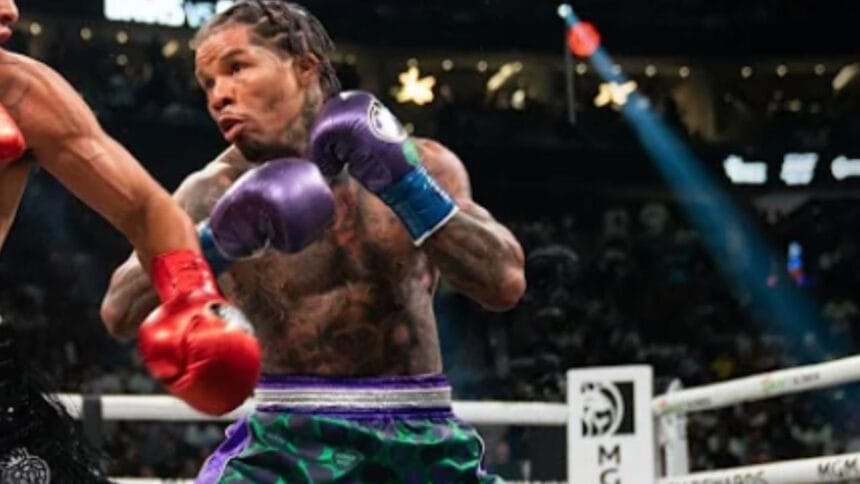
Davis Defends Against Accusations of Influence
Gervonta Davis, commonly known as “Tank,” is at the center of a swirling controversy as he prepares for his first defense of the WBA lightweight title against Frank Martin. Allegations have surfaced suggesting that Davis influenced the World Boxing Association (WBA) to implement a new hydration rule, ostensibly to level the playing field against Martin, who is known for rehydrating significantly above his fighting weight.
The New Hydration Rule
The controversy began when the WBA announced a new rehydration limit, effective across all weight classes, just a month before the Davis-Martin clash scheduled for June 15. This rule aims to prevent fighters from gaining an excessive amount of weight between the weigh-in and the fight, a practice that can lead to mismatches and potential health risks.
Davis’s Denial
In response to the accusations, Davis vehemently denied any involvement in the rule change. He expressed disbelief at the notion that he could wield such influence over the WBA. “I’m not sure what you all are talking about. But [if it’s true], are you all telling me I have enough power to tell the WBA what to do? I don’t even know what is going on,” Davis asserted.
Leonard Ellerbe Weighs In
Davis’s advisor, Leonard Ellerbe, supported his fighter’s stance, welcoming the rule as a necessary measure to curb so-called “weight bullies” who exploit the system by cutting massive weight and then rehydrating excessively. “Glad to see these weight bullies slowly but surely being put in check,” Ellerbe commented, implying that the new rule would ensure fairer fights.
A History of Controversy
The WBA has faced its share of criticism over the years, with controversies surrounding the proliferation of titles and inconsistent enforcement of rules. At one point, the organization had 57 world titleholders, including interim champions. WBA President Gilberto Mendoza has worked to streamline the titles and restore credibility, but the rehydration rule marks a significant policy shift that has stirred the pot.
Comparison with the IBF
The new WBA rule aligns more closely with the International Boxing Federation (IBF), which has long enforced strict rehydration limits. The IBF is respected for its stringent regulations, and the WBA’s move could be seen as an effort to emulate the IBF’s model and regain trust among boxing fans and media.
Davis’s Rise and Titles
Before being elevated to the lightweight title, Davis held ‘regular’ titles and won his first world titles at super featherweight between 2017 and 2018. His rapid ascent in the boxing world has been marked by his powerful performances and strategic maneuvers, such as his victory over Ryan Garcia, which was clouded by weight issues and rehydration concerns.
The Ryan Garcia Factor
Interestingly, the hydration rule discussion brings to mind Davis’s fight against Ryan Garcia. Garcia, a Golden Boy star, defeated Devin Haney without adhering to the agreed weight limits, raising questions about fairness and competitive integrity. This context adds another layer to the current debate, suggesting a pattern in Davis’s career where weight and hydration play pivotal roles.
What This Means for the Fight
The introduction of the new hydration rule just before the Davis-Martin fight has sparked a heated debate within the boxing community. If Martin cannot rehydrate to his usual level, the dynamics of the fight could change dramatically, potentially giving Davis an advantage. This situation underscores the ongoing challenges in boxing regarding weight management and fairness.
The Broader Implications
The WBA’s decision to enforce rehydration limits reflects broader efforts to ensure fighter safety and fair competition. However, the timing and motivations behind the rule change will likely continue to be scrutinized. The outcome of the Davis-Martin fight, and the implementation of this rule, could set a precedent for future bouts and influence the governing bodies’ approach to regulating the sport.
A Divisive Issue
As fans and pundits prepare for the upcoming fight, the hydration rule controversy remains a divisive issue. While some view it as a necessary step towards fairness and safety, others see it as potentially manipulated to benefit certain fighters. Regardless of the perspectives, one thing is clear: the debate has added an extra layer of intrigue to what promises to be an explosive matchup on June 15.
In conclusion, the allegations that Gervonta Davis manipulated the WBA to introduce a new hydration rule have stirred significant controversy. Davis’s denial and the WBA’s motivations are under scrutiny as the boxing world watches closely. The outcome of this fight, influenced by the new rule, could have lasting implications for the sport’s regulation and fairness.