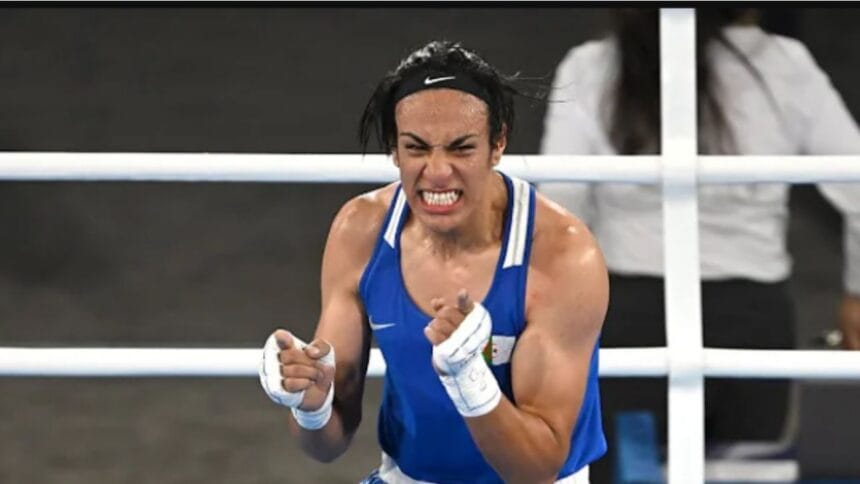
1. Geneticist Claims Biological Doping in Women’s Boxing
In a shocking turn of events, Hungarian geneticist András Falus has alleged that Imane Khelif and Lin Yu-Ting’s biological makeup could be considered a form of biological doping. This claim has ignited controversy following Khelif’s recent victory over Hungarian boxer Luca Anna Hamori. Falus, who has been awarded the prestigious Széchenyi Prize, argued that the genetic characteristics of these athletes could give them an unfair advantage, raising serious questions about fairness in women’s boxing.
2. IBA’s Press Conference Stuns Boxing Community
The International Boxing Association (IBA) recently held a startling press conference revealing private testing procedures for Khelif and Lin. According to IBA, these athletes underwent gender testing in 2022 and 2023, which revealed chromosomal anomalies. The IBA’s disclosure of these results, paired with the decision to disqualify Khelif and Lin from women’s events, has triggered widespread debate within the boxing community.
3. 2022 Testing Results: A Troubling Discovery
The controversy began with testing conducted on May 17, 2022, at the Sistem Tip Laboratory in Istanbul. The results showed that both Khelif and Lin had XY chromosomes, typically found in males. Despite these findings, the results were initially met with skepticism, and the IBA chose to monitor the situation rather than take immediate action. The situation took a dramatic turn when the IOC failed to respond to the IBA’s concerns.
4. Reaffirmation of Results at 2023 World Championships
In a bid to confirm the initial findings, Khelif and Lin were tested again at the IBA Women’s World Boxing Championships in New Delhi on March 17, 2023. The results were consistent with the 2022 tests, showing the same chromosomal pattern. This second confirmation led to a decisive shift in the IBA’s stance, culminating in the athletes’ disqualification from women’s events.
5. IBA’s Rule Change: A New Era for Boxing
On May 12, 2023, the IBA amended its Technical and Competition Rules to prohibit athletes with XY chromosomes from competing in women’s categories. The rule change was driven by concerns over fairness and safety, as well as pressure from multiple stakeholders within the sport. This move marks a significant shift in the regulatory landscape of boxing.
6. The IBA’s Stance: Safety and Fairness First
The IBA has emphasized that its primary concern is the health and safety of female competitors. According to the IBA, the presence of XY chromosomes in female athletes creates a potential health risk and competitive imbalance. Despite the athletes’ personal identities and official documents, the IBA’s focus remains on ensuring a level playing field for all competitors.
7. The Controversial Test Results: A Deeper Look
Falus’s claim that the testosterone levels in athletes with XY chromosomes could be up to a hundred times higher than in typical females has added a new layer of controversy. This assertion suggests that the biological advantages of such athletes may be akin to doping, raising questions about how the sport should address these genetic differences.
8. IOC’s Role and Future Implications
The International Olympic Committee (IOC) has yet to adopt a clear stance on the issue. The IBA’s decision to use XY chromosome testing as a criterion for eligibility could potentially influence future Olympic regulations. The controversy underscores the need for the IOC to establish clear guidelines to prevent similar issues in future competitions, particularly for the 2028 Los Angeles Games.
9. Reactions from the Boxing Community
The boxing world is divided on the issue. Some argue that the IBA’s actions are necessary to preserve fairness in women’s competitions, while others view the decision as a violation of athletes’ rights. This debate highlights the complexities of balancing competitive integrity with inclusivity and respect for individual identities.
10. The Road Ahead: What’s Next for Boxing?
As the boxing community grapples with these new regulations, the future of athletes with differences in sexual development (DSD) remains uncertain. The sport faces a critical juncture, where it must navigate the delicate balance between fairness, safety, and inclusivity. How the IBA and IOC address these challenges will shape the landscape of competitive boxing in the years to come.