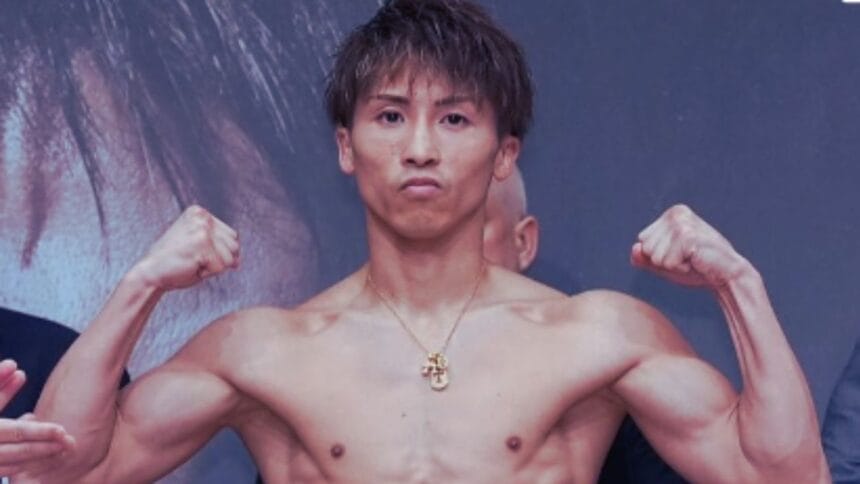
Something like Naoya Inoue has never before happened in Japan since Godzilla emerged from the ocean. Dubbed the “Monster,” Inoue has led an exciting revolution in Japanese boxing in addition to cementing his reputation in the annals of boxing history. He was among the first to experience victory at the 2008 Japan Under-15 championships, which are now known as the Junior Champion League. This is where his legacy started. This competition ignited a seismic shift in Japan’s boxing culture and set the path for future professional stars.
At just 27-0 and 24 knockouts under his belt, Inoue has emerged as the unquestioned champion at 122 pounds. In 16 of his last 17 world title bouts, he has won via knockout, dominating every elite competitor in his path. However, Inoue’s ascent is more than just a unique success story; it’s the model that has brought forth a new wave of Japanese winners.
A Guide to Greatness
The 2008 championship win for Inoue was more than just a personal one. It paved the way for a lot of other boxers to go after him. Japan now stands tall, just behind the USA (11) and Mexico (8), with seven world champions. The true tale, however, is found in the spirit of rivalry and the willingness to take on any challenge; it lies beyond the numbers.
In contrast to other competitors who treat their unbeaten records as priceless possessions, Japanese boxers tackle each match with dignity. Losses are lessons, not things that ruin a career. This distinct way of thinking has produced fighters who push themselves to new limits in every fight rather than fearing defeat.
Even though Ginjiro Shigeoka, Yudai Shigeoka, and Kazuto Ioka recently suffered upset losses to lose their world crowns, these losses are only hiccups on a long journey to success. For Japan, a single defeat only marks the start of a new chapter in their struggle.
A Country of victors
Nine years ago, Naoya Inoue was the most well-known boxer from a new generation that was showcased. Naoya’s younger brother Takuma Inoue was a member of the select group and has since established a successful career for himself. Takuma, who currently owns the WBA bantamweight title, is a steady and calculated fighter who lacks the explosive power of his bigger brother. He doesn’t live in Naoya’s shadow; instead, he forges his own road and succeeds on it with honour.
The Inoue siblings are only the start. With two WBC title reigns under his belt, Kenshiro Teraji will look to add a flyweight title to his collection when he takes on Cristofer Rosales. With victory seemingly inevitable, Teraji’s hegemony at the top of his division will continue.
Ascending Stars and The Winds of Tomorrow
Even if Inoue is still leading the way, Japanese boxing has a bright future ahead of it. The WBC bantamweight champion, rangy southpaw Junto Nakatani, recently defeated Vincent Astrolabio via first-round knockout. Nakatani has all the makings of a future multi-weight world champion because to his enormous 5’8″ stature. His matchup with sibling Takuma or Naoya Inoue has the potential to be one of the biggest bouts in Japanese boxing history.
Another talented fighter, Kosei Tanaka, will soon defend the WBO title against Phumelele Cafu. The four-division champion Tanaka doesn’t seem to be slowing down. He has the technical skill and perseverance to keep winning his weight class. In addition, Seigo Yuri Akui, who defeated Artem Dalakian in January, will shortly contest for the WBA flyweight title.
With wins from top players like Nakatani, Iwata, and Teraji, Japan might have ten world champions in a short while. Prospects like Yuta Sakai, a formidable 19-year-old southpaw, and Tenshin Nasukawa, a well-liked former kickboxing champion, promise to carry on Japan’s boxing heritage for many years to come.
Japan’s Boxing Traditions: A Unique Breed
The unique boxing culture of Japan is what distinguishes its fighters. There’s no careful matching or stat-pumping. Every battle is an exercise, and losing is only a necessary step. Fighters like Inoue have been able to succeed and remain at the top because of their daring approach.
In a nation where the value of honour is intrinsic, each fight is fought with pride, dignity, and resolve. Fighters don’t guard their records; instead, they look for the most difficult tasks because they understand that real excellence comes from going above and beyond.
With so much talent, Japan has emerged as a boxing powerhouse, prepared to challenge the US and Mexico’s long-standing dominance. Even though Naoya Inoue is the “Monster” in the lead, he is only one of many incredible fighters influencing the direction of the sport.
a boxing dynasty
Japan’s boxing dynasty is far from ended, even though Naoya Inoue may retire from competition at some point. There will be more champions, and although if they might never be able to fully fill Inoue’s shoes, they will continue the great legacy of honour, tenacity, and unwavering pursuit of excellence. For the boxing scene in Japan, the winds are nothing short of a storm, as the Japanese proverbially state,
“Tomorrow’s winds will blow tomorrow.”