Imane Khelif’s Olympic Earnings: What’s at Stake for the Algerian Boxer in Paris 2024
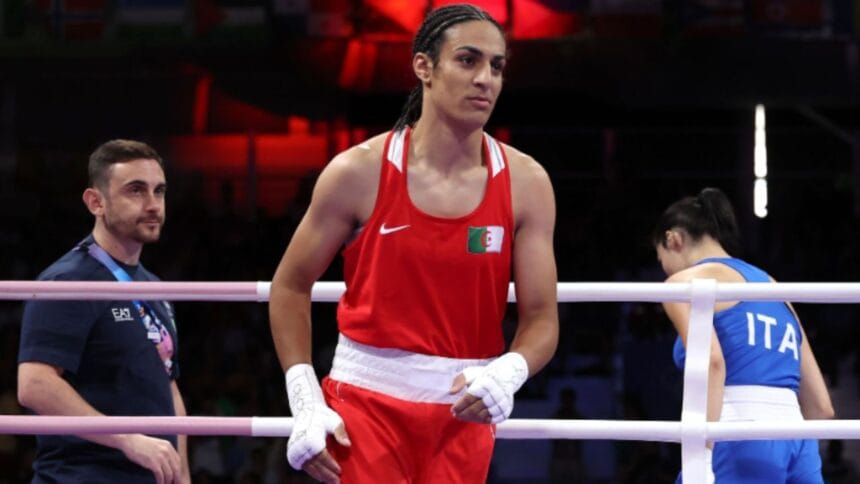
In the electrifying atmosphere of the 2024 Paris Olympics, Imane Khelif, the 25-year-old Algerian boxing star, has captured global attention not only for her fighting prowess but also for the controversies that have surrounded her participation. Following her stunning 46-second victory over Italy’s Angela Carini, Khelif has been a focal point of intense debate over gender eligibility in sports. Now, as Khelif prepares for the semifinals, the big question is: How much could she potentially earn from her Olympic exploits?
The Controversial Path to Paris
Khelif’s journey to the Paris Olympics has been anything but straightforward. Initially banned by the International Boxing Association (IBA) last year due to gender eligibility issues, Khelif’s path was cleared only after the IOC suspended the IBA over judging scandals and transparency issues. The IOC’s subsequent tests contradicted those of the IBA, allowing Khelif to compete this year. Despite securing at least a bronze medal, the financial implications of her Olympic success remain shrouded in uncertainty due to her disqualification history.
Earnings Breakdown: What’s on the Line
If Khelif clinches a medal at the Paris 2024 Olympics, the financial rewards could be significant, though they come with their own set of complications. According to recent announcements, Olympic medalists are set to receive substantial prize money, albeit with some variations depending on their medal color:
- Gold Medal: $100,000 total—$50,000 for the athlete, $25,000 for the National Federation, and $25,000 for the coach.
- Silver Medal: $50,000 total—$25,000 for the athlete and $25,000 shared between the coach and the National Federation.
- Bronze Medal: $25,000 total—$12,500 for the athlete and $12,500 shared between the coach and the National Federation.
In addition, athletes who reach the quarterfinals receive a consolation prize of $10,000. For Khelif, securing a gold medal would mean $50,000 directly, with additional bonuses for her National Federation and coach. However, her past disqualification casts a shadow of uncertainty over whether she will receive these rewards. The IBA’s unclear stance on athletes with prior disqualifications adds to the ambiguity surrounding Khelif’s potential earnings.
View this post on Instagram
The IBA’s Unexpected Twist
Adding another layer to this complex situation, the IBA recently stirred controversy by awarding a $50,000 prize to Angela Carini, Khelif’s opponent who withdrew from their round-of-16 bout after a brief but intense confrontation. The IBA’s President, Umar Kremlev, announced the prize as a gesture of empathy towards Carini, highlighting the organization’s commitment to boxer safety. Kremlev also pledged $25,000 each to Carini’s coach and the Italian Boxing Federation, bringing the total support to $100,000.
However, the Italian Boxing Federation has expressed dissatisfaction with this move, rejecting the prize money. Their refusal reflects ongoing tensions with the IBA and dissatisfaction with the handling of the situation. The federation’s stance adds another twist to the already complicated prize distribution scenario.
IBA President Umar Kremlev expressed his sympathy, saying, “I couldn’t look at her tears. I am not indifferent to such situations, and I can assure that we will protect each boxer.”
View this post on Instagram
The Road Ahead
As Khelif approaches her Olympic semifinal, the focus remains on her performance and the resolution of her financial entitlements. Despite the controversies, Khelif’s determination and skill have shone brightly throughout the competition. Her potential earnings are significant but overshadowed by the broader issues at play.
For now, Khelif’s journey symbolizes not just athletic achievement but also the ongoing challenges and debates within the world of sports. Her story is one of resilience and strength, reflecting the broader struggles faced by athletes in the global arena.